

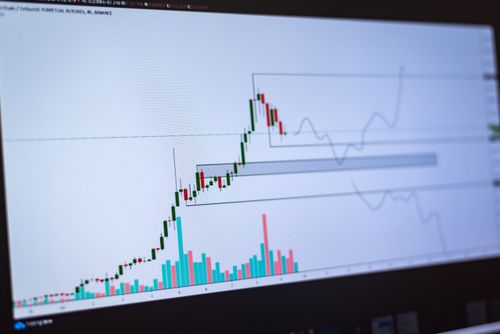
Understanding Currency Market Movements
Executive Summary
The Forex Trading Strategy Guide provides a structured financial intelligence framework for understanding how currency markets move, what drives exchange rate volatility, and how traders interpret macroeconomic signals to make informed capital allocation decisions.
Forex markets are not driven by prediction alone—they are shaped by interest rate differentials, liquidity cycles, geopolitical risk, and central bank policy divergence.
As outlined by Investopedia’s forex market definition, currency trading is fundamentally a global macroeconomic system where price movements reflect shifting capital flows between economies.
Direct Answer: What Is Forex Trading?
Forex trading is the buying and selling of global currencies with the objective of profiting from exchange rate fluctuations.
It operates as a decentralized global market where currency pairs reflect relative economic strength between countries rather than isolated asset value.
The Bank for International Settlements (BIS) identifies forex as the largest financial market in the world, with daily liquidity driven by institutional flows, central banks, and cross-border trade activity.
Core Financial Analysis: What Drives Currency Movements
1. Interest Rate Differentials
Currency valuation is heavily influenced by differences in interest rates between countries.
When one central bank offers higher yields, capital tends to flow toward that currency, increasing demand.
According to Federal Reserve monetary policy reports, rate adjustments directly impact global capital allocation and currency strength.
2. Macroeconomic Stability
Economic growth, inflation levels, and employment data influence investor confidence in a currency.
Stronger macroeconomic performance typically leads to currency appreciation over time.
3. Geopolitical and Risk Sentiment
Forex markets react quickly to geopolitical instability, war risk, and global uncertainty.
During risk-off environments, capital often flows toward safe-haven currencies such as USD and JPY.
Research from IMF World Economic Outlook highlights how global shocks reshape currency demand structures.
4. Trade Balances and Capital Flows
Countries with strong export positions and capital inflows tend to experience currency strengthening over time.
Trade deficits can create long-term pressure on currency valuation.
Financial Decision Framework: Forex Market Structure Model
| Factor | Market Impact | Decision Focus |
|---|---|---|
| Interest Rates | Capital flow direction | Rate differential positioning |
| Inflation Data | Currency purchasing power | Central bank expectation shifts |
| Liquidity Cycles | Volatility expansion or contraction | Entry timing sensitivity |
| Geopolitical Risk | Safe-haven demand shifts | Risk-off positioning strategy |
This framework emphasizes that forex trading decisions are macro-driven rather than purely technical, requiring structured interpretation of global economic signals.

Financial Intelligence Insights
Forex trading is often misunderstood as a purely predictive system, but in reality it is a probability-based macroeconomic reaction system.
Hidden risks:
- Excessive leverage amplification in volatile conditions
- Liquidity gaps during major news events
- Overreaction to short-term data releases
- Correlation breakdown between currency pairs during crises
Behavioral mistakes:
- Overtrading during high volatility periods
- Ignoring macroeconomic context in favor of signals
- Chasing short-term price spikes
- Lack of disciplined risk management per trade
Opportunity cost:
Capital tied in poorly timed forex positions reduces flexibility and increases exposure to unexpected macro shocks.
According to Reuters currency market analysis, liquidity conditions and central bank expectations often have stronger influence than technical indicators alone.
Practical Scenarios
Scenario 1: High Volatility Environment
Central banks are adjusting interest rates rapidly, creating unstable currency swings.
Decision focus: reduce leverage exposure and prioritize macro alignment.
Scenario 2: Stable Economic Cycle
Low volatility environment with predictable policy direction.
Decision focus: trend-based positioning with controlled risk scaling.
Scenario 3: Crisis or Geopolitical Shock
Flight to safety dominates currency flows.
Decision focus: safe-haven currency allocation and risk reduction.
As noted by European Central Bank economic analysis, monetary policy divergence between regions significantly impacts exchange rate volatility.
Action Checklist
- Monitor central bank interest rate decisions
- Track inflation and employment data releases
- Assess geopolitical risk exposure
- Evaluate currency correlation structures
- Apply strict leverage control per position
- Align trades with macroeconomic cycles
Frequently Asked Questions
What is forex trading?
Forex trading is the exchange of global currencies to profit from changes in exchange rates.
What drives forex prices?
Interest rates, macroeconomic conditions, geopolitical risk, and capital flows are the primary drivers.
Is forex trading high risk?
Yes. Forex markets are highly leveraged and sensitive to global macroeconomic changes.
Can forex trading be predictable?
Not consistently. It operates on probability-based macroeconomic reactions rather than fixed outcomes.
Conclusion
The Forex Trading Strategy Guide demonstrates that currency markets are driven by global macroeconomic forces rather than isolated price patterns.
As highlighted by Investopedia forex market structure analysis, successful forex decision-making depends on understanding macro drivers, risk exposure, and capital flow dynamics rather than short-term speculation.
Ultimately, forex trading is a structured financial decision system where risk management, macro awareness, and disciplined execution determine long-term outcomes.
References
Investopedia – Forex Market Fundamentals
Bank for International Settlements (BIS) – Global Forex Market Data
Federal Reserve – Monetary Policy Reports
International Monetary Fund (IMF) – World Economic Outlook
Reuters – Currency Market Analysis
European Central Bank – Economic Bulletins