

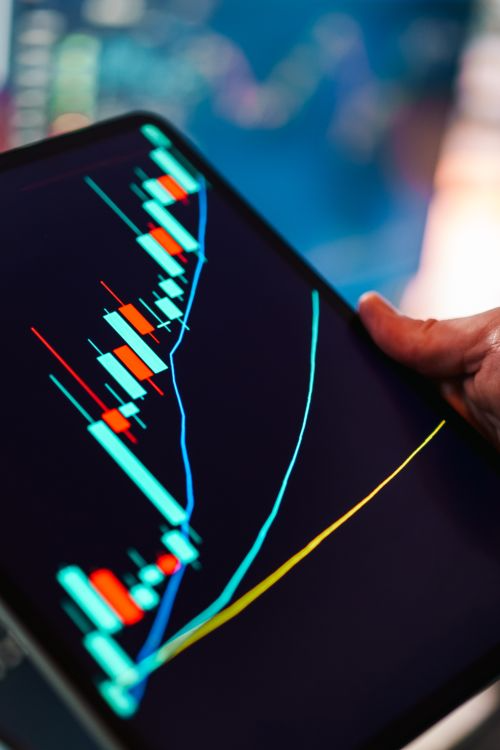
How International Finance Shapes Investments
Global Markets Guide: Executive Summary
The Global Markets Guide explains how international financial systems, capital flows, and macroeconomic cycles influence investment decisions across equities, currencies, bonds, and commodities.
Global markets are interconnected systems where economic shocks in one region can rapidly transmit to others through trade, interest rates, and investor sentiment shifts.
According to the IMF World Economic Outlook, global economic synchronization has increased, meaning regional financial events now have stronger cross-border effects than in previous decades.
Direct Answer: What Are Global Markets?
Global Markets Guide: Global markets refer to the interconnected financial systems where capital is traded across countries, including equities, foreign exchange, bonds, and commodities.
These markets determine how capital flows between economies based on growth expectations, risk levels, and monetary policy differences.
The World Bank Global Economic Prospects report highlights that global investment performance is increasingly shaped by synchronized macroeconomic cycles.
Global Market Guide
Core Financial Analysis: What Drives Global Market Behavior
1. Monetary Policy Divergence
Differences in interest rates between central banks drive capital flows across borders.
Higher interest rates tend to attract foreign capital, strengthening currency and equity inflows.
Research from the Federal Reserve monetary policy framework shows that rate decisions significantly influence global liquidity conditions.
2. Trade and Capital Flows
Global trade balances affect long-term currency strength and equity market performance.
Export-driven economies often accumulate stronger capital inflows, supporting asset valuations over time.
3. Risk Sentiment and Market Cycles
Investor sentiment shifts between risk-on and risk-off environments, driving global asset rotation.
During uncertainty, capital typically flows into safe-haven assets such as U.S. Treasuries and gold.
The Bank for International Settlements (BIS) confirms that global liquidity flows amplify these cyclical behaviors across markets.
4. Geopolitical and Systemic Risk
, trade conflicts, and regulatory changes can disrupt global capital allocation.
Markets often price in geopolitical risk before economic data reflects real impact.
Financial Decision Framework: Global Allocation Model
| Factor | Impact | Decision Focus |
|---|---|---|
| Interest Rate Differentials | Capital movement across borders | Currency and bond allocation timing |
| Economic Growth Cycles | Regional market performance | Equity exposure selection |
| Liquidity Conditions | Market volatility expansion | Risk management positioning |
| Geopolitical Stability | Safe-haven flows | Defensive asset allocation |
This framework forces investors to evaluate global exposure not as isolated markets, but as interconnected capital systems responding to macroeconomic shifts.

Financial Intelligence Insights
Global Markets Guide: Global markets are often misinterpreted as predictable systems, but they are actually dynamic feedback loops between policy, capital flows, and investor psychology.
Hidden risks:
- Hidden correlation spikes during global crises
- Currency risk eroding foreign investment returns
- Liquidity withdrawal in emerging markets during stress cycles
- Overexposure to USD-denominated global shocks
Behavioral mistakes:
- Home-country bias limiting diversification benefits
- Chasing international returns without macro understanding
- Ignoring currency hedging effects
- Overreacting to short-term geopolitical events
Opportunity cost:
Failure to diversify globally can reduce access to growth cycles in emerging economies and limit long-term portfolio resilience.
According to Reuters global market analysis, capital flows often shift rapidly between regions based on changing interest rate expectations rather than long-term fundamentals alone.
Practical Scenarios
Scenario 1: Global Expansion Cycle
Multiple economies experience synchronized growth driven by liquidity expansion.
Decision focus: broaden equity exposure across developed and emerging markets.
Scenario 2: Global Tightening Cycle
Central banks raise rates simultaneously, reducing global liquidity.
Decision focus: reduce risk exposure and prioritize defensive assets.
Scenario 3: Geopolitical Shock Environment
Uncertainty leads to rapid capital reallocation to safe-haven assets.
Decision focus: risk hedging and capital preservation strategies.
The European Central Bank Economic Bulletin shows that policy divergence between regions significantly affects capital flows and exchange rate volatility.
Action Checklist
- Monitor global interest rate cycles
- Track currency exposure across investments
- Evaluate regional economic growth trends
- Assess geopolitical risk environments
- Balance developed vs emerging market exposure
- Implement currency risk management where needed
Frequently Asked Questions
What are global markets?
Global Markets Guide are interconnected financial systems where capital flows across countries in equities, bonds, currencies, and commodities.
Why do global markets move together?
Because capital flows are influenced by global liquidity, interest rates, and synchronized economic cycles.
What is the biggest risk in global investing?
Currency risk and correlation spikes during global crises.
Is global diversification always beneficial?
It improves long-term resilience but does not eliminate systemic market risk.
Conclusion
The Global Markets Guide demonstrates that international finance is a system of interconnected capital flows shaped by macroeconomic policy, liquidity cycles, and investor sentiment.
As highlighted by IMF global macroeconomic research, understanding cross-border financial linkages is essential for effective portfolio construction in modern markets.
Ultimately, global markets are not isolated opportunities but a unified financial ecosystem requiring structured risk evaluation, capital allocation discipline, and macroeconomic awareness.
References
International Monetary Fund (IMF) – World Economic Outlook
World Bank – Global Economic Prospects
Federal Reserve – Monetary Policy Framework
Bank for International Settlements (BIS) – Global Liquidity Statistics
Reuters – Global Market Analysis
European Central Bank – Economic Bulletin